
India's 500 MWe Prototype Fast Breeder Reactor (PFBR) at Kalpakkam in Chennai has achieved first criticality, marking a significant advancement in the country's nuclear energy capabilities and long-term energy security.

The Indira Gandhi Centre for Atomic Research will conduct six-week summer training programmes in Physics and Chemistry for students entering the final year of their Master's degree.
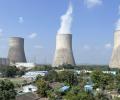
In a significant move, the United States on Wednesday removed restrictions on three Indian nuclear entities, over a week after National Security Advisor Jake Sullivan announced that Washington was finalising steps to 'remove' hurdles for civil nuclear partnership between Indian and American firms.

Indira Gandhi was murdered by her bodyguards on the morning of October 31, 1984. Her death sparked off horrific anti-Sikh riots, killing over 3,000 innocent Indians.

In many ways, this is only the beginning -- of a new chapter in India's nuclear story, and of a future where its vast thorium reserves could finally power its ambitions.
India's strong nuclear programme, with comprehensive capability for the entire nuclear fuel cycle and the strong technical support from Bhabha Atomic Research Centre and Indira Gandhi Centre for Atomic Research, were highly appreciated, according to Chairman of Atomic Energy Regulatory Board S K Sharma, who led the 17 member high-level Indian delegation. India presented its 206-page report for the first time that included the effective regulatory mechanism for power plants.

Dr Suresh Moses Lee and his wife Suseela who have lived at the township built near the Kalpakkam nuclear power plant for three decade, ally fears of people living near nuclear plants.
The Department of Atomic Energy invites applications for its one-year Orientation Course for engineering graduates at the Indira Gandhi Centre for Atomic Research Training School at Kalpakkam as part of the BARC Training School programme.
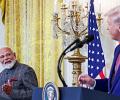
Prime Minister Narendra Modi and US President Donald Trump have vowed to move forward with plans to work together to build US-designed nuclear reactors in India. The decision was made during their meeting at the White House, where they also agreed to significantly expand energy cooperation. The move comes after India announced plans to amend its nuclear liability law and the Atomic Energy Act, which had previously been obstacles to the implementation of the US-India civil nuclear deal.
Keeping in view the ever-increasing energy requirement, India is all set to establish at least four nuclear reactors besides the world's first thorium-based reactor by 2020.
Baldev Raj, scientist and director, Indira Gandhi Centre for Atomic Research, Kalpakkam, said the current installed nuclear power generation capacity is likely to increase five-fold to 25,000 Mwe by 2050 from the current 3,900 Mwe. The proposed expansion would require over Rs 125,000 crore. Nuclear power accounts for 3 per cent of India's total electricity generation and is estimated to go up to 25 per cent in 2050.
The body of a missing computer engineer of the Indira Gandhi Centre for Atomic Research at Kalpakkam near Chennai has been found, the police said on Friday. The body of 37-year old S Ananthanarayanan was found near the railway track between Vandalur and Guduvancherry section on February 15, the day he went missing, but was identified only on Thursday night by his father-in-law, said the Kalpakkam police.
Two more fast breeder reactors of 500 mega watt electric capacity each would be set up here by 2020, a top official of the Indira Gandhi Centre for Atomic Research said on Tuesday.
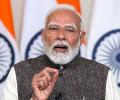
India on Saturday announced plans to amend its nuclear liability law and set up a nuclear energy mission, a move that came ahead of Prime Minister Narendra Modi's likely visit to the United States.
He was responding to a query on NSG guidelines that restrict the export of reactors by members of the grouping, including the US, France, Russia, Australia and Japan.

After nearly two decades of nuclear competition with Pakistan, India with the several long-range ballistic missiles in development is seemingly now paying attention to its future strategic relationship with China, a think-tank report has said.

There is a reason this 11 year phenomenon is a rule as much as it is an observation. It speaks to the nature of man and what humans are like, explains Aakar Patel.
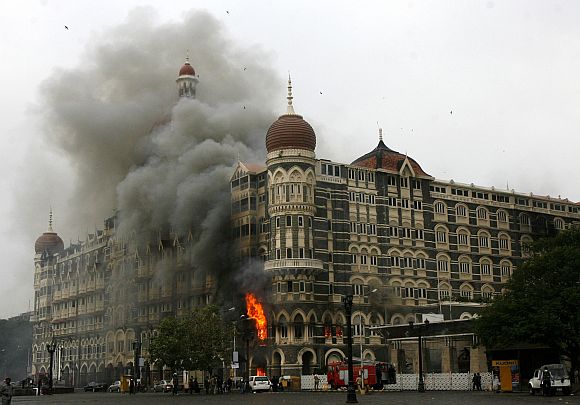
'Headley's testimony indicates to what extent the Pakistan government and its proxies can go to destroy not only Indian scientific talent but also international expertise.'

It is unconscionable to choose between Sardar Patel, who united India physically, and Indira Gandhi, who gave meaning, content and pride to the unity of the nation and became a martyr at the altar of national unity, says Ambassador T P Sreenivasan.
The entire area has been cordoned off and National Disaster Management Authority has also been informed about the incident.
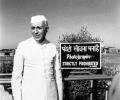
'His contributions in setting up transparent precedents of governance are still basically intact despite the cynicism of several of his successors,' notes Jamini Bhagwati.

It's time India re-visited its Western alliances for the attitude and approach that the West reserves for the nation when it comes to security cooperation of the kind that they might not have visualised outside of China, India's bug-bear, asserts N Sathiya Moorthy.

With the launch of the first indigenous aircraft today, India will join a club of nations like the United States, Russia, China, the United Kingdom and France that possess nuclear-powered submarines
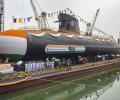
The status of the current submarine force level is alarming and we need to address the threat perceptions expeditiously. Critical decisions pertaining to national security cannot be delayed any further due to the rapidly changing maritime threat perceptions and growing strategic importance of the Indian Ocean region, asserts Commodore Venugopal Menon (retd).

'If not, we can become frighteningly chaotic, more chaotic than what we are today.' 'In today's environment in the country, we still have a window of opportunity.'

20 years ago this day, May 11, 1998, India conducted its second nuclear test at Pokharan in Rajasthan. In a fascinating interview on Rediff.com, K Subrahmanyam revealed how Indian PMs reacted to nuclear ambitions.
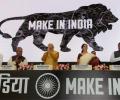
'India is going to maintain its ties to China, India is going to develop a strong relationship with the United States. It means that India is going to have the flexibility to pick and choose its friends.' 'That's traditional Indian foreign policy, and it's smart.' Former US ambassador to India Frank Wisner, one of America's sharpest minds on South Asia, tells Aziz Haniffa/Rediff.com what Washington can expect from Narendra Modi's visit.

'No PM has said no to anything we have proposed. I am not a politician and I cannot give speeches about things, but a lot of good things have been done in science by previous governments.' 'Under Dr Manmohan Singh, we could do a few important things. I used to meet him once in 6, 8 weeks. He often said, 'Professor Rao, you assume that you have my approval and carry on.' He was shy and decent. He is a real gentleman.' 'Science keeps me going at 80. I feel young.' Professor C N R Rao, the eminent scientist who was honoured with the Bharat Ratna, on the state of science in India.

'Nehru is often portrayed as a visionary with his head in the clouds. But he had his feet firmly planted on the ground when it came to building and nurturing institutions and setting them on the right path with the right traditions,' says B S Raghavan.

Mahesh Rangarajan, director of the historic Nehru Memorial Museum and Library in New Delhi, tells Sheela Bhatt how the first prime minister will always remain relevant, and the efforts being made to keep his legacy alive.
